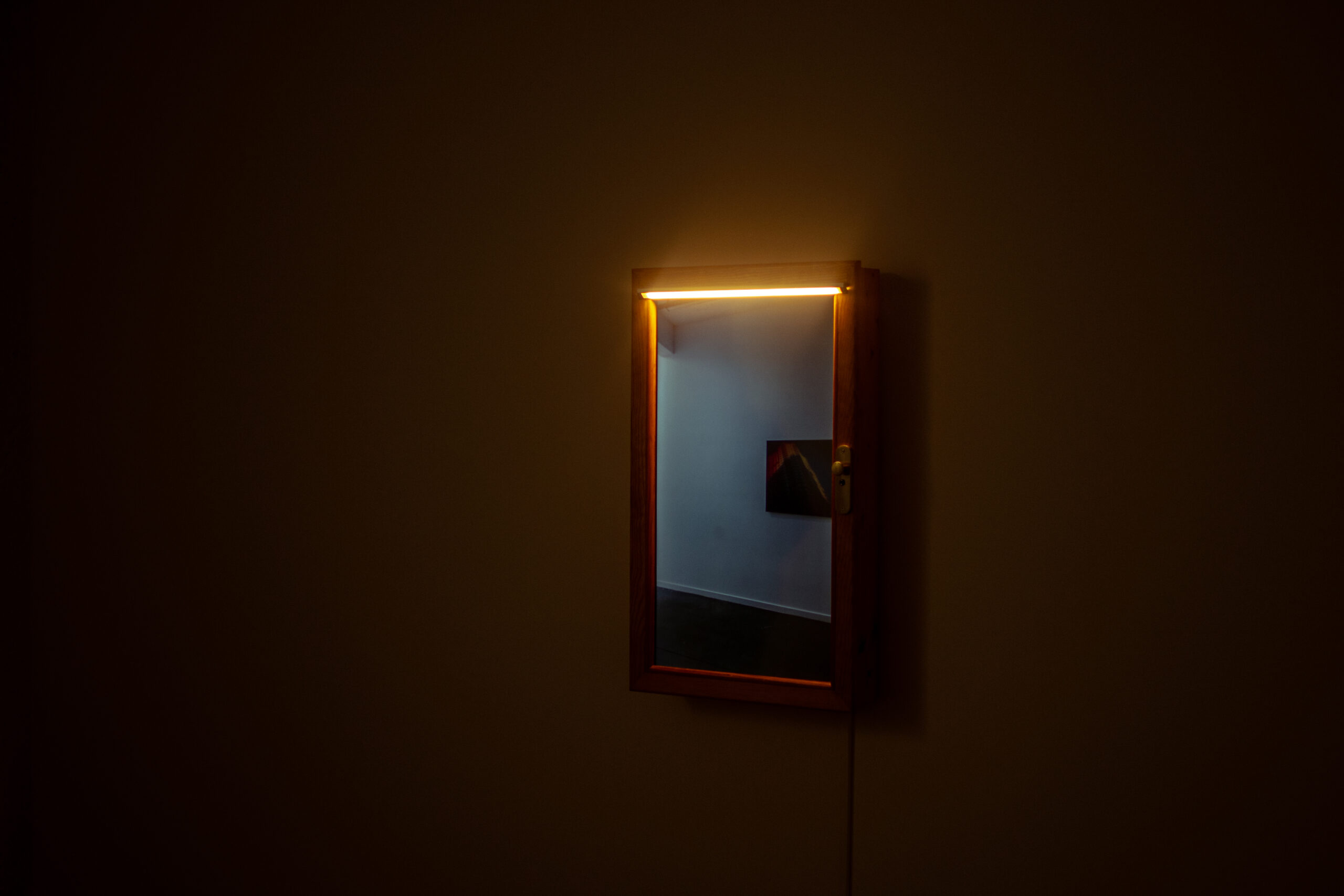
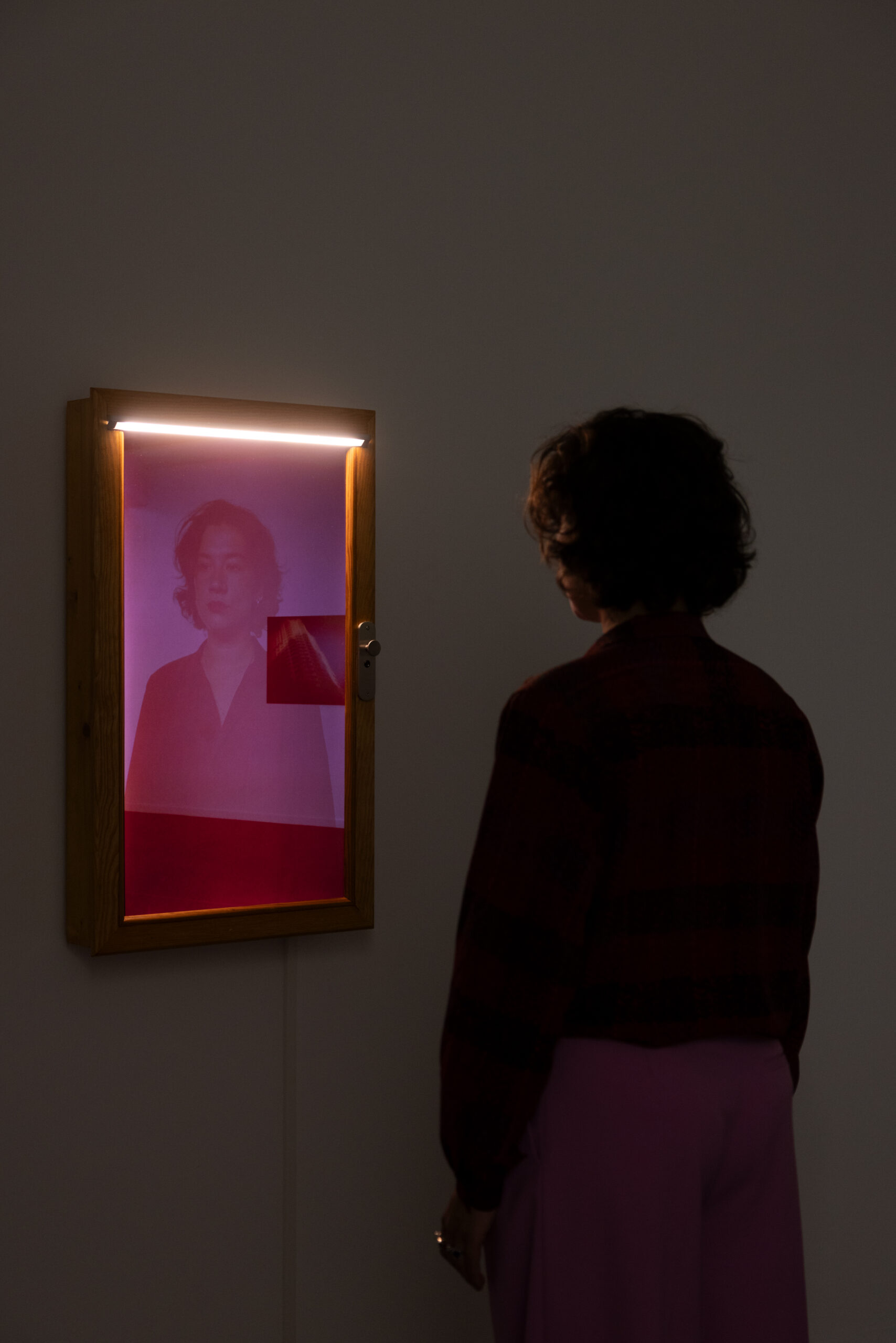
The word arrebato (rapture) comes from Latin rapere, meaning “to seize violently” or “abduct.” This installation stages such an abduction: a transformation that unsettles the body before its own image. 

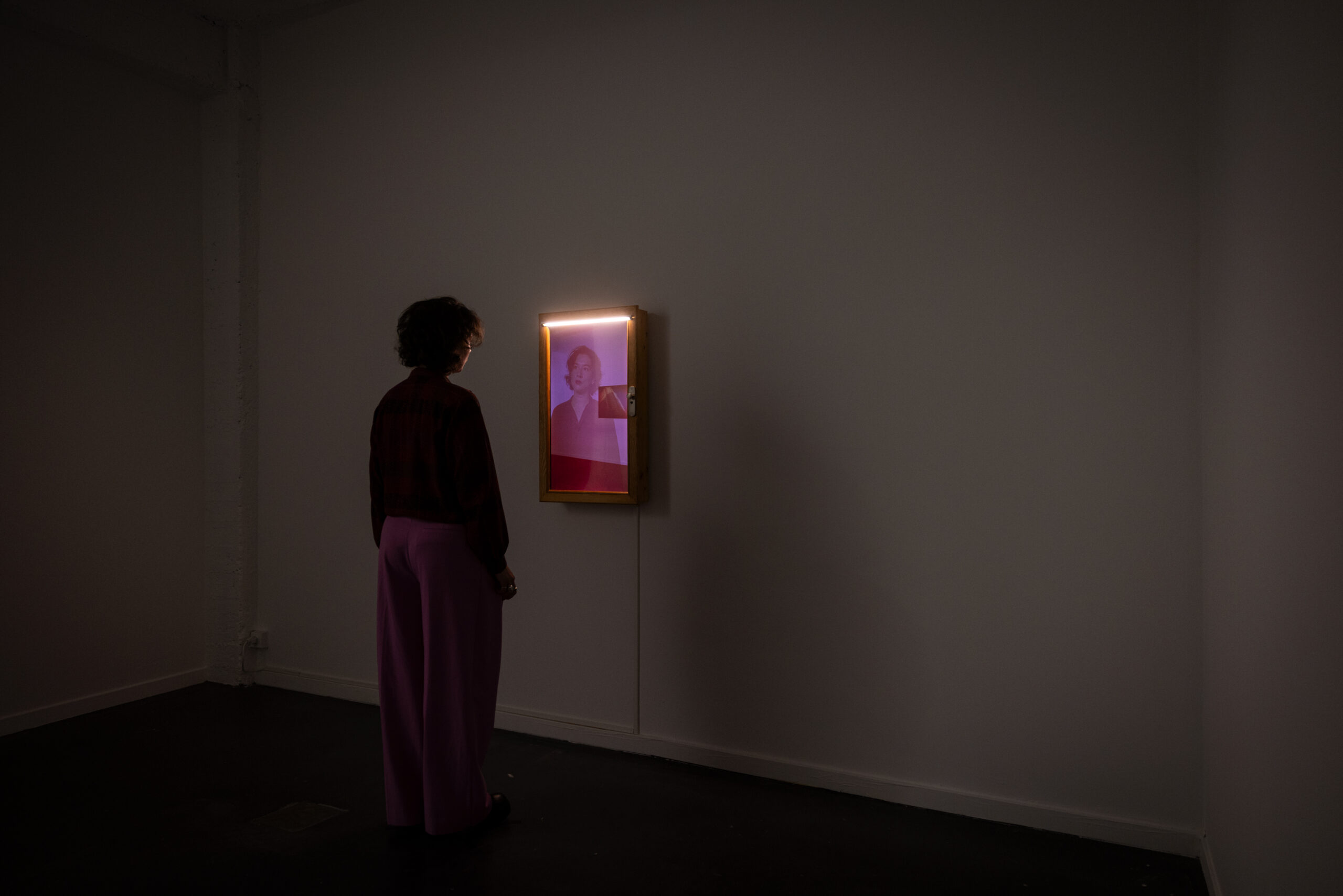
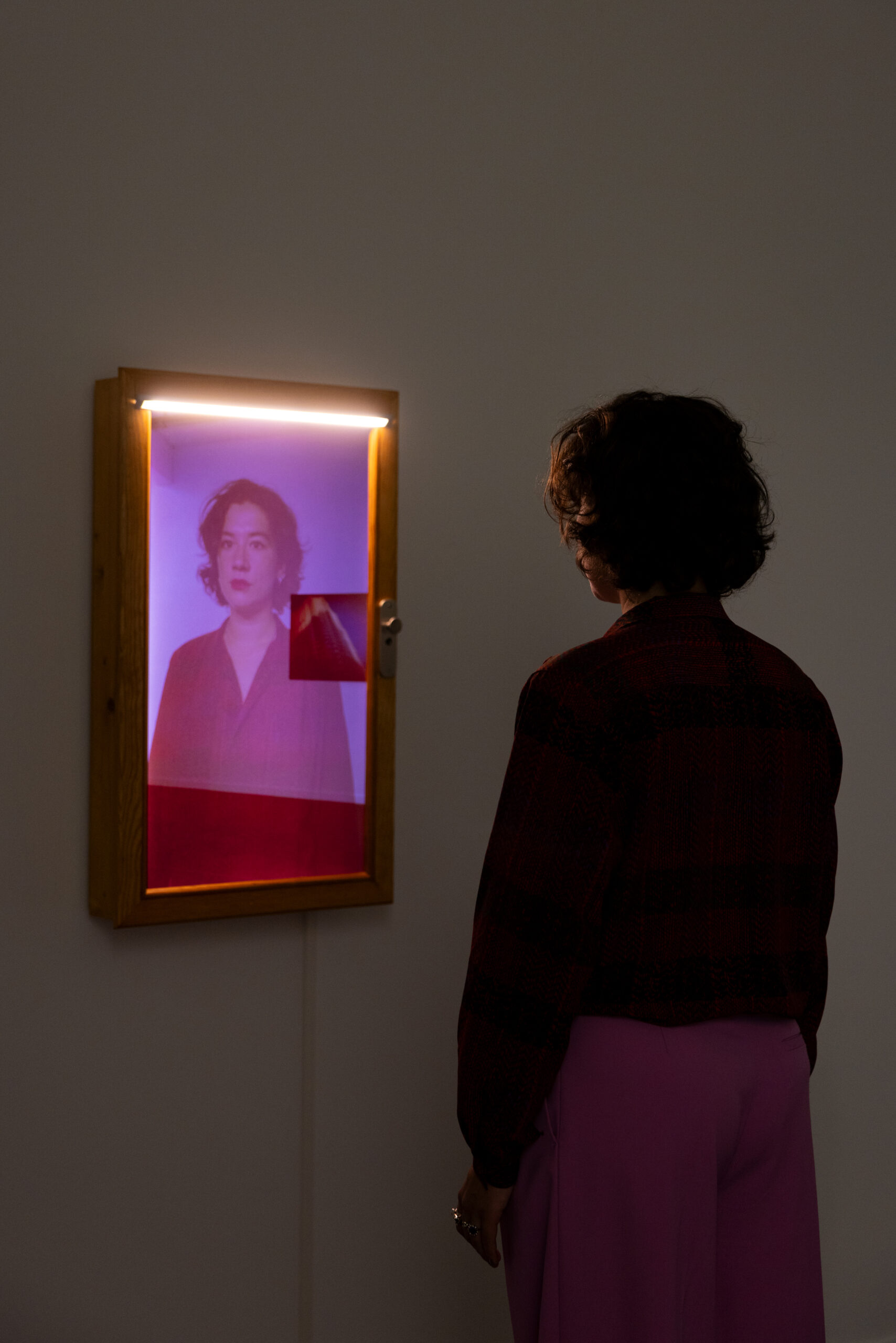
Arrebato (1979) introduces Pedro, obsessed with filming himself asleep until the camera devours him: frame by frame, he vanishes into red. Azparren’s Arrebatador follows this logic. A mirror becomes a camera. As viewers pose, their reflection vanishes into red: a bleeding frame, a vampiric gaze. 

Here, the mirror is a backlit LED screen with a hidden camera. When approached, a motion detection system identifies the viewer’s silhouette and progressively erases it, frame by frame, until only red remains. This fusion of software and hardware makes looking a performative act where the goal is not to reflect but to abduct a part of the viewer’s presence. 

Today’s culture of overexposure echoes this mechanism. Every selfie and filter multiplies a digital visibility that erodes the flesh, creating filtered avatars detached from real bodies. The image replicates like a yūrei (the Japanese ghosts trapped in reflections), or low-res Hito Steyerl’s “poor images” degrading with each copy. The haunted mirror returns: capturing a soul fragment in an endless loop. This piece invites us to experience the void of the image, where the mirror becomes a threshold between presence and disappearance.

  • Arrebatador (2025)

    Interactive intervention installation for a bathroom mirror.
    Commissioned by EUROPALIA ESPAÑA and Kunstencentrum Nona.

    Creative coding: Maria Costa Graell
    Carpentry: Maximiliano Focke
    Photography: Kristof Vrancken. Courtesy of Kunstencentrum Nona

  • presented at:

    EUROPALIA ESPAÑA 2025
    Iván Zulueta, Through the Looking-Glass
    Kunstencentrum Nona, Mechelen, Belgium

    National Museum of Anthropology
    Reflections: Around the Imaginary of Iván Zulueta
    2026, Madrid

    In collaboration with Filmoteca Española and the Directorate-General for Cultural Heritage and Fine Arts of the Spanish Ministry of Culture. With the support of Museo CA2M, Radio Televisión Española (RTVE), and Kunsthal Mechelen.